
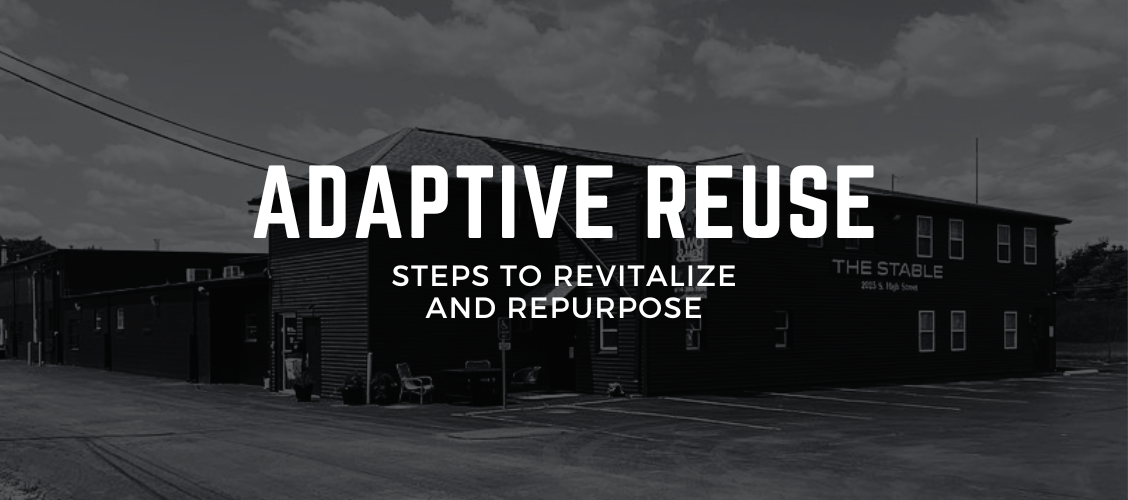
The magic of adaptive reuse lies in its ability to take relics of the past and transform them into functional spaces for the present. It’s like taking an old, forgotten book and rewriting its chapters for a new generation. But how does this enchanting process work? Let’s delve into the typical steps that lead to the successful adaptive reuse of a building.
1. IDENTIFICATION AND ASSESSMENT
- The building’s historical or architectural significance.
- Its current structural condition.
- The feasibility of the desired new function within the existing structure.
2. DESIGN AND PLANNING
- Respecting the original architecture while adding modern amenities.
- Addressing any structural challenges, ensuring the building’s longevity.
- Ensuring that renovations don’t degrade the building’s historical significance.
- Meeting safety and building standards.
3. CONSTRUCTION AND RENOVATION
- Preserving delicate or decaying architectural features.
- Retrofitting the building with modern systems like HVAC, plumbing, and electrical networks.
- Integrating advanced tech infrastructure, like broadband connectivity and energy efficient features.
4. PROJECT COMPLETION AND LAUNCH
After passing inspections and meeting all requirements, the building is ready for its new purpose. This is the moment where the past and present converge, culminating in a functional space that pays homage to its history.
Adaptive reuse is a journey that carries the essence of the past into the heart of the future. While each project is unique, the steps outlined above provide a roadmap to transform aging edifices into vibrant hubs of modern activity. Through adaptive reuse, we find a sustainable, respectful, and imaginative way to write new stories in old buildings.

 Columbus Commercial Real Estate