
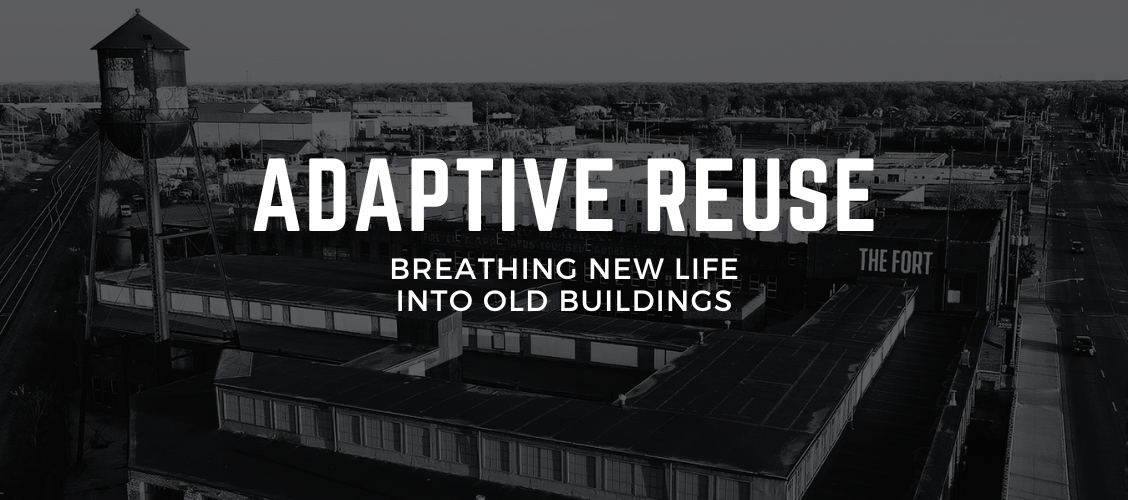
In today’s urban landscape, the tug-of-war between preserving historical architecture and making space for modern facilities is a common dilemma. But there’s a sustainable and innovative solution that merges the best of both worlds: adaptive reuse.
WHAT IS ADAPTIVE REUSE?
Adaptive reuse refers to the process of redeveloping an old, often historic, building for a purpose other than its original design. It’s not merely a renovation; it’s a reimagination. From turning old warehouses into loft apartments, derelict churches into bookshops, or Victorian-era schools into boutique hotels, adaptive reuse is about preserving the past while preparing for the future.
WHY CHOOSE ADAPTIVE REUSE?
- SUSTAINABILITY.
- CULTURAL HERITAGE.
- ECONOMIC VIABILITY.
- URBAN REVITALIZATION.
In an age where “out with the old, in with the new” is often the mantra, adaptive reuse stands as a testament to the idea that the old can be made new again. It’s a marriage of respect for the past and anticipation for the future, showing that cities can evolve without erasing their histories.

 Columbus Commercial Real Estate